外側10反復×5分割、内側3分割の設計でモデル選択と評価を分離。
Separated model selection from evaluation with 10 repeated 5-fold outer CV and 3-fold inner CV.
公開コードPublic code
ネストした反復交差検証で、特徴量設計と複数分類器をデータリークなく比較するベンチマーク。
A leakage-safe benchmark comparing feature sets and classifiers with nested repeated cross-validation.
技術スタック / Tech Stack
00
01
外側10反復×5分割、内側3分割の設計でモデル選択と評価を分離。
Separated model selection from evaluation with 10 repeated 5-fold outer CV and 3-fold inner CV.
標準化やハイパーパラメータ調整を各訓練フォールド内に閉じ込め、リークを防止。
Kept scaling and hyperparameter tuning inside each training fold to prevent leakage.
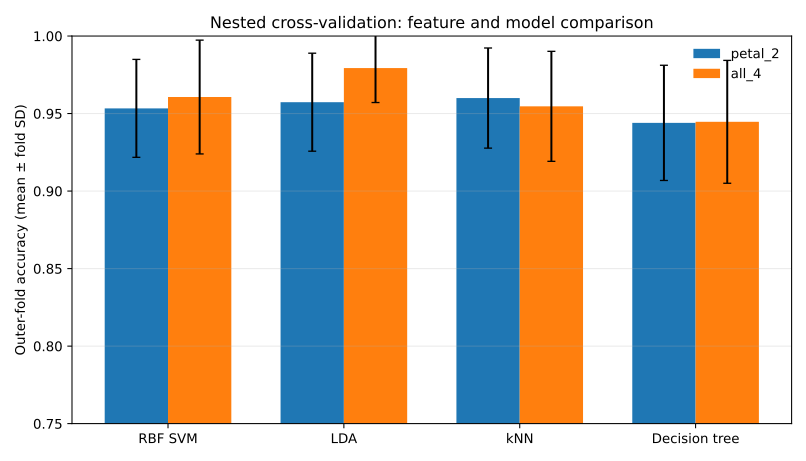
SVMの2特徴量と4特徴量の差は統計的に決定的でなく、4特徴量LDAが記述的に最高精度。
The two- versus four-feature SVM difference was not statistically decisive, while four-feature LDA had the best descriptive accuracy.
02
小規模分類で、特徴量追加の効果を過大評価せず複数モデルを公平に比較する。
Compare classifiers fairly on a small dataset without overstating the benefit of adding features.
SVM、LDA、k近傍法、決定木をネストした反復層化交差検証で評価する。
Evaluate SVM, LDA, k-NN, and decision trees using nested repeated stratified cross-validation.
対応ブートストラップと符号反転検定で、同一分割上の特徴量差を評価する。
Use paired bootstrap intervals and a sign-flip test to assess feature-set differences on identical splits.
再現可能な比較基盤を構築し、わずかな精度差と統計的不確実性を分けて報告。
Produced a reproducible comparison that separates small accuracy differences from their statistical uncertainty.
03
150件の古典的な教材データであり、実運用性能や外部集団への一般化は示さない。
This classic 150-row teaching dataset does not establish production performance or generalization to external populations.
04
公開コードPublic code
公開データ、再現コード、テスト、結果図を含む独立した公開リポジトリとして整備済み。
Prepared as a standalone public repository with open data, reproducible code, tests, and result figures.